Free and open source · Mac, Windows and Linux
Stop pasting API keys into .env files.
PassBook keeps one encrypted store on your machine. Every app and agent you run reads from it, and every read is written down. Paste a key once. Rotate it once.
The problem
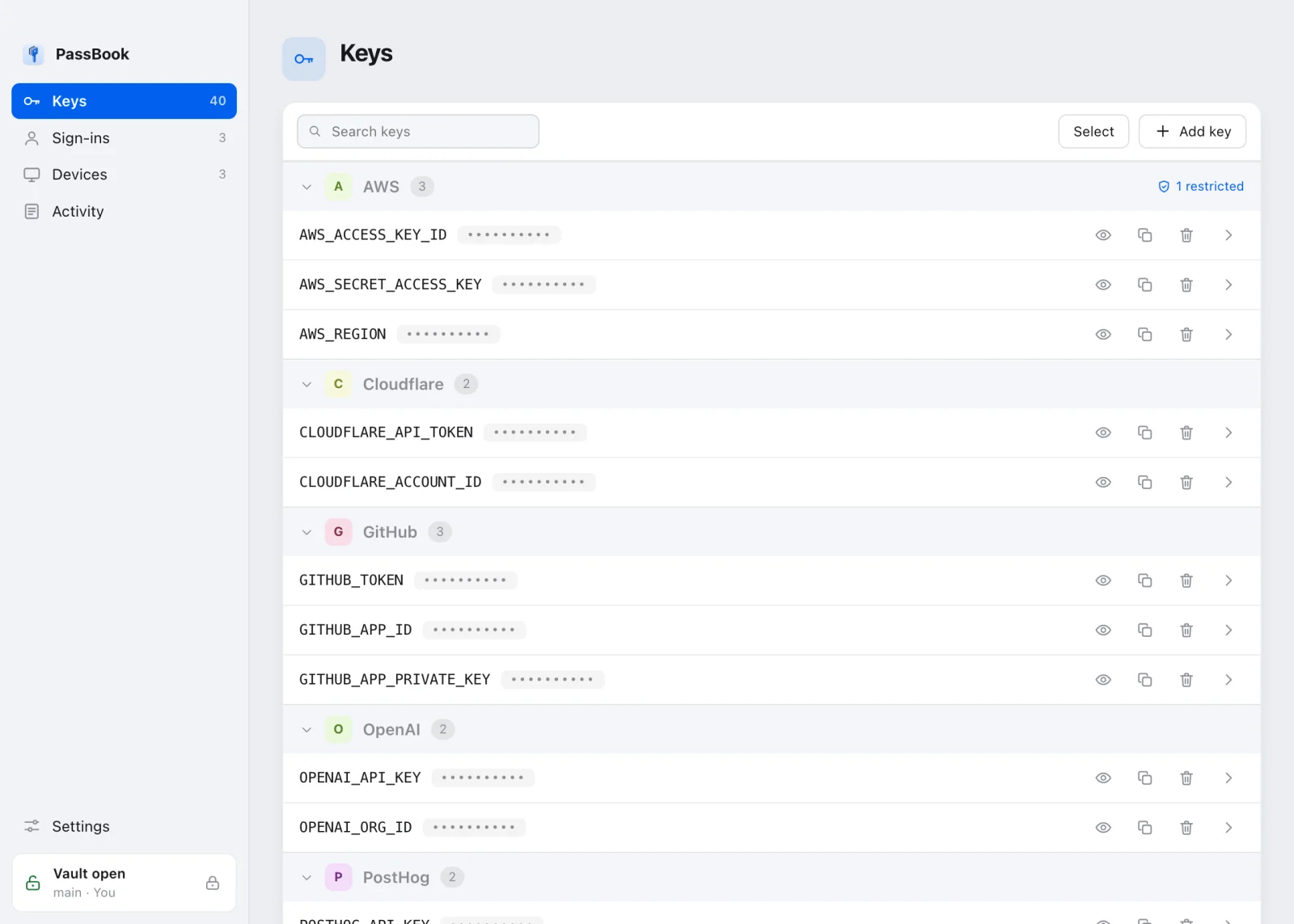
Three apps. Three copies of the same key.
Rotate it, miss one, and that is the one that breaks in production. Delete a project and its copy sits on your disk for good. Hand a script your environment and it can read all of it.
How it works
Add a key once. Every app finds it.
Every app resolves the same file by the same rule, so the first one sets PassBook up and every one after adopts it. Nothing to sync, nothing to merge.
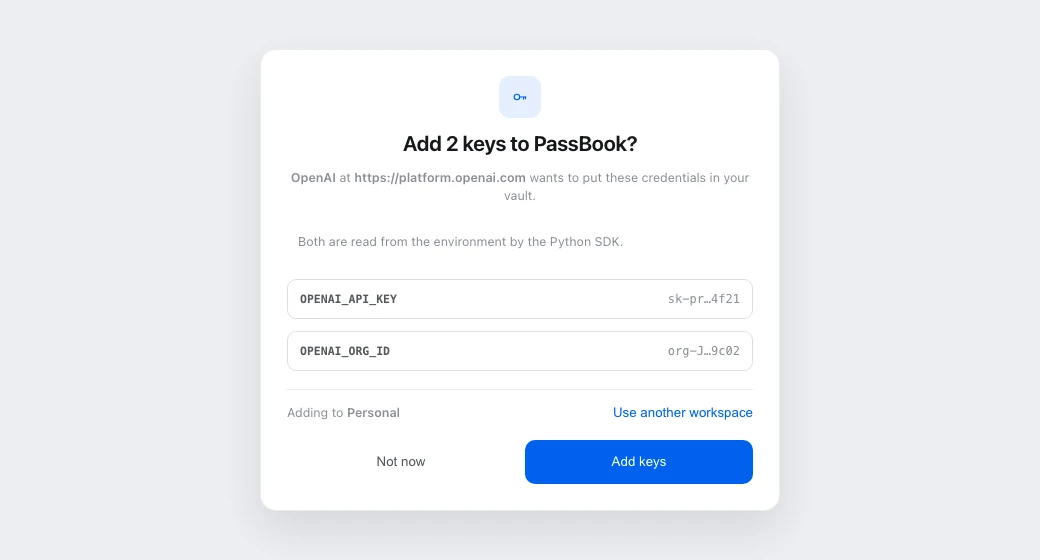
Websites can hand you a key
A provider's page asks to add a key. You see the names, pick the workspace, and press Add. Nothing is copied or pasted.
Sealed at rest
Every value is ciphertext on disk until you sign in with Touch ID, Windows Hello, a passkey or a password.
Every read, written down
What asked for which key, and when. Never the value. A refusal shows up too.
Who can read what
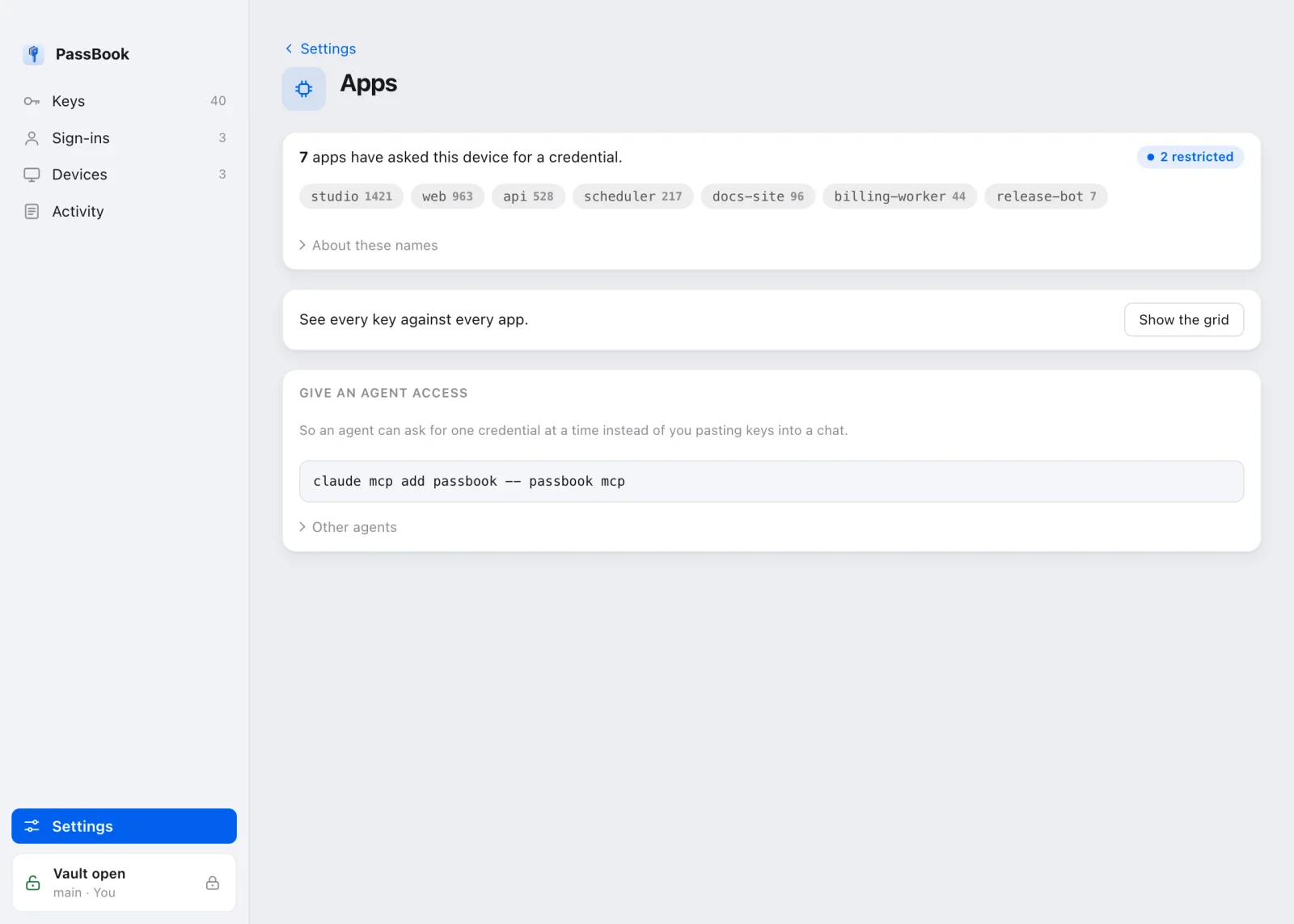
Each key has its apps, its projects and its reach. An app gets what it was given and nothing else, and you can build the rules from what your apps actually asked for.
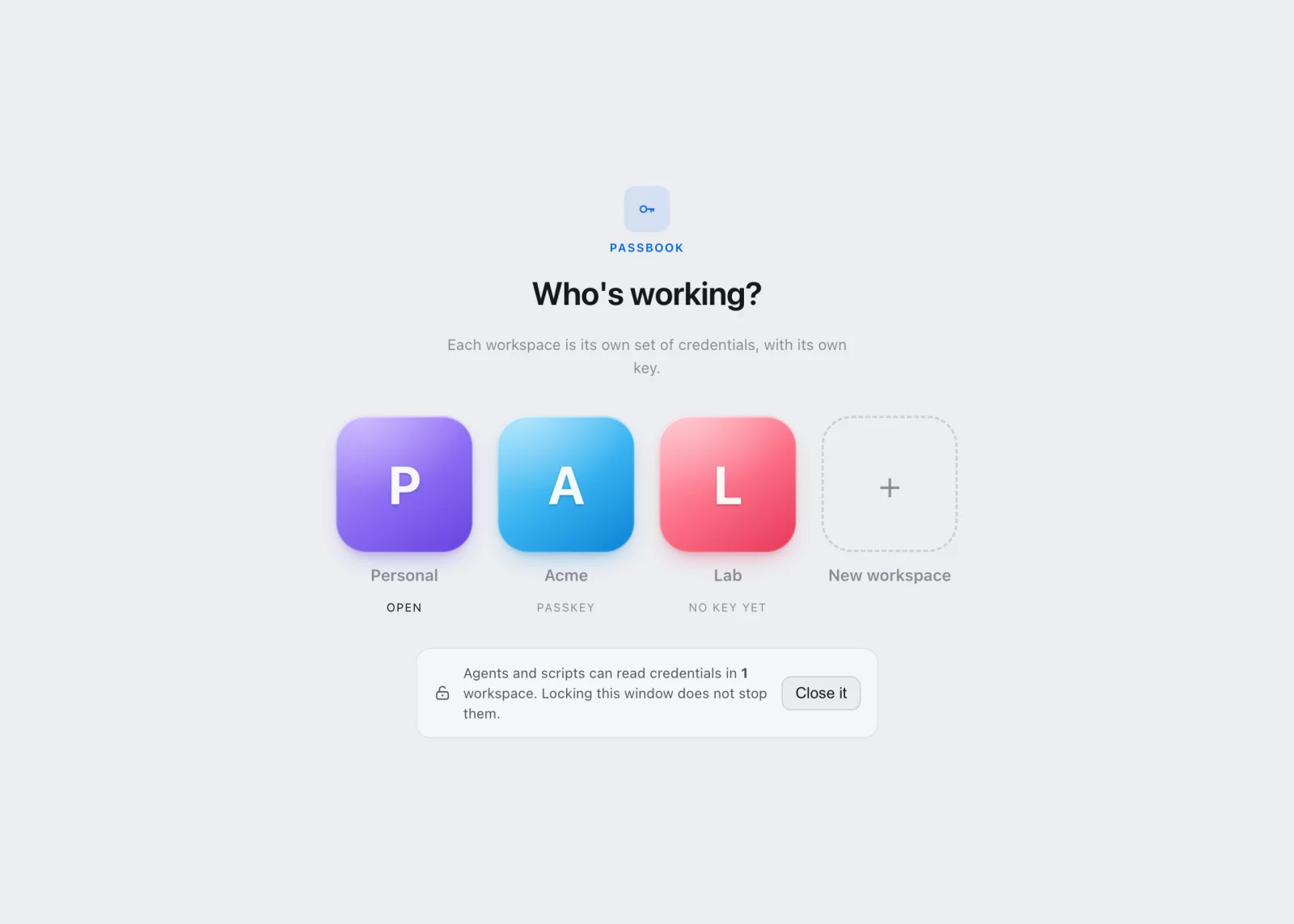
A workspace per client
Each workspace opens with its own key. Sign in to yours and a client's keys stay sealed on the same disk.
Agents
Give an agent a key, not your whole environment.
Agents run commands and write everything they see into a transcript. With PassBook an agent asks for a key by name and gets that key or a refusal, recorded either way. The value goes into the process PassBook starts, and comes back out of its output as a placeholder.
- Works with any agent that speaks MCP
- Keys can be bound to the hosts and commands allowed to receive them
- Sign-ins refresh themselves, so an agent never handles a token
$
New in 1.10.28
Add a device with one line.
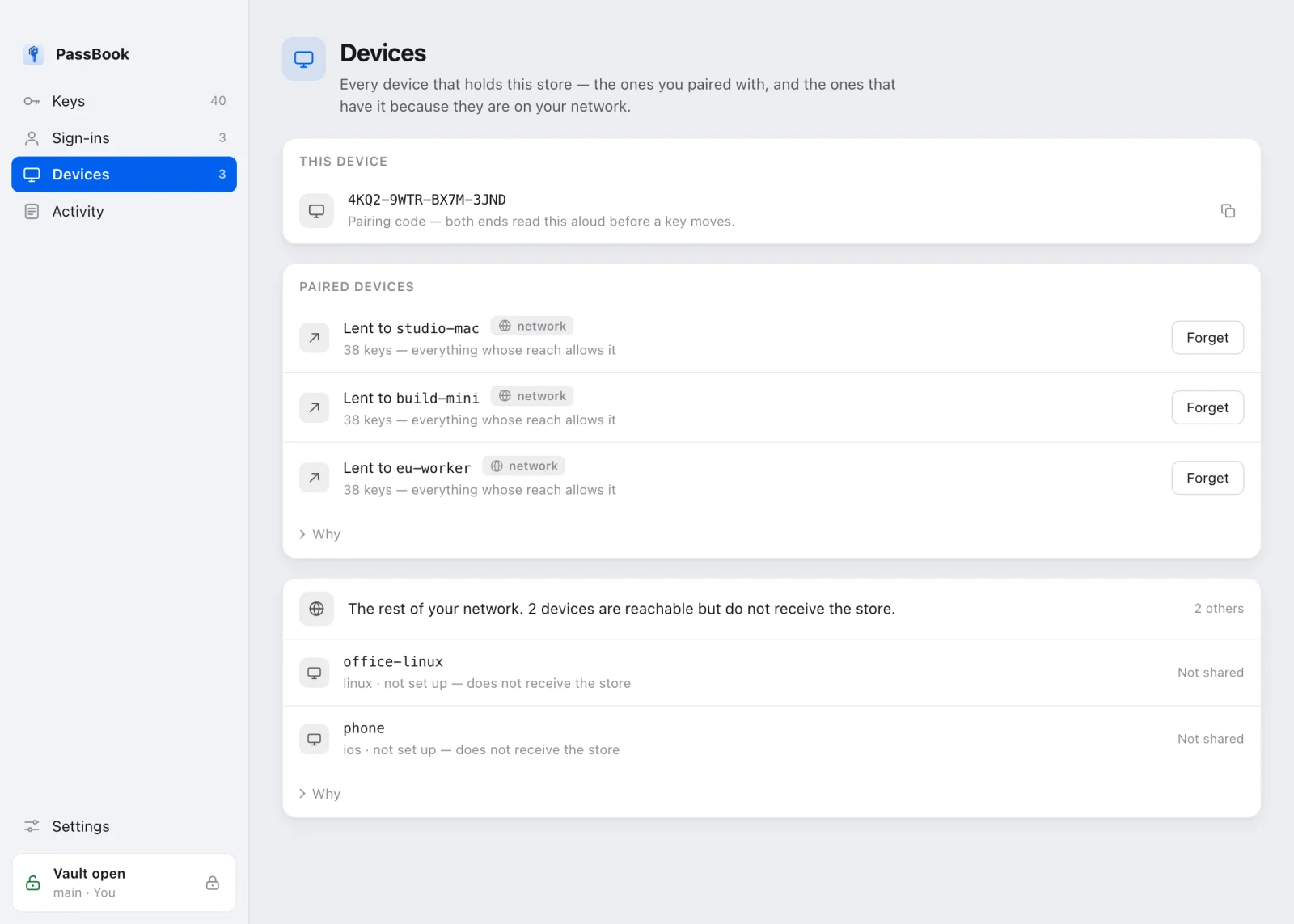
A bot, a server or another laptop of yours. Choose what it gets (every key, a group, a project or single keys), then run one line on it. The keys arrive sealed to that machine, and stay up to date.
passbook join pbj1.…- Limit the hosts, commands and apps the keys can reach there
- Change a key here and it follows within minutes
- Unlink it, and the machine deletes its copies the next time it checks in
What it does not claim
Honest about what it stops.
It is not malware protection.
A program running as you can still read the store file. PassBook makes reads recorded and narrow, not impossible.
Unlinking is not a recall.
A machine that is off, offline or compromised keeps what it was sent, and whatever it already did with a key is done. Rotate at the provider. PassBook lists which keys.
It does not cap your spending.
Set spending limits at the provider. PassBook shows what each account has left.

Your keys, in one place.
Get the app for Mac, Windows or Linux. The command line installs beside it.
uv tool install git+https://github.com/LiamVisionary/passbookFree and open source, Apache-2.0. Read the guide. HivemindOS keeps its own keys in PassBook. See what else HivemindOS does.